SAINT LUCIA'S AMBASSADOR TO CUBA, HE DR. CHARLES ISAAC DELIVERS A STATEMENT ON THE OCCASION, COMMEMORATED ON DEC. 8.
 We are in fact a great pool of the world community, rooted in Africa, India- Asia, the Americas and Europe. We are both genetically and culturally an expression of the historical experience that has given rise to our presence as a unique people; and as such, the diverse manifestations of our power, creativity and intelligence is reflected in our determination to overcome the imposed barriers against our sustained growth and development.
From the struggles against slavery and extreme exploitation, to universal adult suffrage and independence; a struggle conditioned by political structures designed to keep us underdeveloped, poor, and undignified, as Caribbean people we continue to embrace each other, with an understanding, conviction and vision that we are stronger together and every milestone is but a platform to build upon. our golden jubilee-this 51st anniversary represents exactly that- “A foundation to build upon.”
The dynamism of Caribbean integration is characterized by the consolidation of relations among CARICOM members, seeking to foster continuous development based on four pillars: Economic integration, foreign policy coordination, human and social development and security. This process does not only entail the active participation of member states and associated members in making decisions and acting in the collective best interest, it also involves the advancement of OECS integration, which is made up of smaller member states of CARICOM.
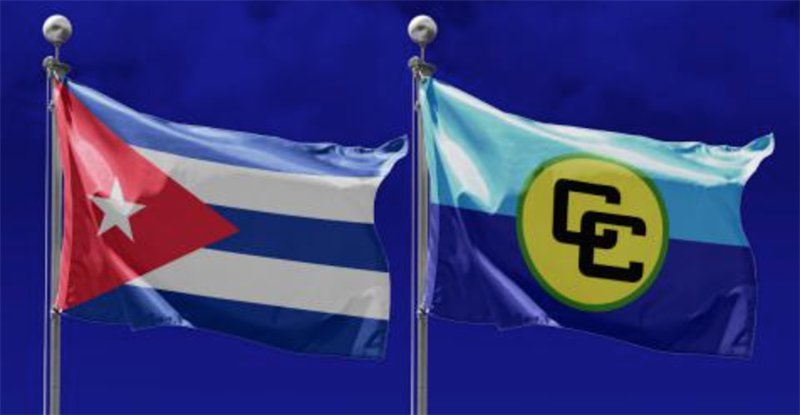
Cuba - CARICOM relations, represents a unique formula of a wider integration movement; incidentally we also celebrate the 51st anniversary of Cuba- CARICOM diplomatic relations this year, on the 8th of December. The historical diplomatic relationship established between CARICOM member states and Cuba, began on December 8th 1972, with the first four independent states namely, Guyana, Jamaica, Barbados and Trinidad and Tobago. We championed the process of international solidarity with the Cuban revolution, through the establishment of diplomatic relations by each member state as they acquired independence. This year we celebrate the 51st Anniversary of Cuba - CARICOM relations- a proud, fulfilling and great historical moment for our Caribbean people.
St. Lucia gained its independence on February 22nd, 1979, and by August 23rd 1979, we had already established diplomatic relations with our sister island of Cuba.
CARICOM member states have consistently expressed solidarity with the Cuban people as they annually joined the world community in condemning the USA imposed economic, commercial and financial blockade at the United Nations General Assembly and other international fora, calling for an end to this inhumane and counterproductive act of aggression; it is one that does not only affect Cuba, but also the other brother and sister islands of the Caribbean in an indirect, but significantly impactful way.
We have all benefited from this relationship in the area of education. In the case of St. Lucia over 750 graduates in different fields, at various levels, making significant contributions as leaders in all areas of development - from politics and diplomacy, health, agriculture, engineering, sports etc. Cuban professionals on the other hand, continue be contracted for the provision of services both at home and in Cuba.
Emerging opportunities for trade in goods and services seem to have eluded some of us for a while. However, we have always been of the view that notwithstanding the embargo, there must be a way of sustainably build our relations beyond solidarity, through trade and corporation in areas such as agriculture, tourism, culture, sports, infrastructure, climate change management system and access to products and services related to Cuba’s impressive bioengineering technology.
The global crises and needed responses to existent conditions that confront our countries and our peoples, expresses itself as heighten tensions associated with the European based-western war, Israel - Palestine war, energy related heighten inflation, climate change challenges, ethnic tensions associated with global wealth distribution imbalances, with calls for a new world economic order and multilateralism, as necessary conditions for balanced sustainable development at the global level, building south-south relations and “putting people first”- people participatory policies of empowerment, at the national and local levels, especially in the case of developing countries, are some of our current challenges to be addresses with urgency.
There is critical and urgent need for people centered policies at the national level and strategic functional cooperation initiatives that enhances our regional and hemispheric integration processes. We must all be conscious of the fact that along with the ongoing global challenges, we are confronted with some of the following important obstacles to our integration process and sustainable development:
1. The inheritance of a political construct that is widely acknowledged as being grossly inadequate and probably irrelevant at this time. The cry for constitution reform in now common place and some changes, though slow and inadequate are being pursued; the struggle for reparatory justice championed by our people has continued to gain international recognition and momentum.
2. The painful lack of air and sea transportation to adequately facilitate the free movement of our people as a necessary condition to foster economic activity and cultural integration.
3. The recurring imposed impact of climate change and our struggling capacity to mitigate and effectively respond.
4. Gross inadequacy of opportunities being created for young persons and insufficient support for our elderly- putting our people at the center of our development agenda.
5. The emerging need to aggressively advance our agenda of keeping the region as a zone of peace.
“Putting People First”- our central policy and process of people’s empowerment, is a necessary condition for sustainable development, while integration through OECS and CARICOM represents our structured process for sustainability; this becomes ever more relevant, as we aggressively pursue such policies, including a distinct focus on youth, with the establishment of a youth economy agency, dedicated to providing business and entrepreneurial development opportunities.
Cuba today is experiencing arguably, the most challenging period in the history of the people’s revolution. It’s one that calls for significant strategic thinking and people centered action. In this regard, the government has now instituted fundamental measures to foster the emergence and development of the MSME, directed at enhancing income generation among a wide section of the population, employment generation, especially among the youth and circumvention of the long-standing impact of the USA’s financial and economic embargo against the Cuban people.
This represents an important opportunity and necessary condition for doing business with our sister island. St. Lucia has begun positioning itself by pursuing an engagement process, towards building a strategic relation with a number of Cuban agencies, including Procuba, the Chamber of Commerce and the MSME group of interested partners, Ministries of Commerce, Health, Superior Education and Agriculture among others. We are seeking to collaborate very directly with this emerging MSME (8000 registered members) while we consolidate our corresponding local agencies’ readiness to do business with their counterparts as we define very clear pragmatic processes that will translate to qualitative relations between the MSMEs at home and Cuba’s emerging membership.
This of necessity, this will require close collaboration and meticulous planning with our Embassy in Havana and the Cuban Embassy in St. Lucia. One may venture to say without any fear of contradiction, that this approach represents one that seeks to reflect the aspirations of all our people in the Caribbean; one that allows us to work and grow together, and as such, we look forward to further enhancement of functional cooperation with Cuba through close collaboration with our embassy resident in Havana to foster the potentially great success that this new opportunity represents.
One looks forward therefore, to our continued growth and closeness, so that we can begin celebrating a new distinct beginning of trade relations with the people of Cuba. We have trust in the determination of our people to build the empowerment processes necessary to overcome-
“Long live our Caribbean people.” Long live Cuban-St. Lucian relations. As our dear leader Fidel would say “Hasta la Victoria Siempre!!!”