DAMAGE ASSESSMENT AND NEEDS ANALYSIS (DANA) IS A CRITICAL STEP TO INFORM DISASTER RESPONSE AND RECOVERY EFFORTS.
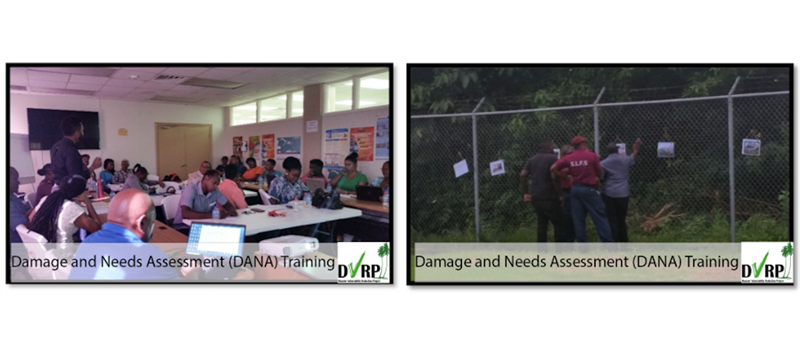 The DVRP is implementing a suite of activities to enhance the capacity of NEMO, including Damage Assessment and Needs Analysis (DANA) Training. The training follows on the heels of Mass Casualty Management training completed earlier this year and will be immediately followed by Community Emergency Response Team (CERT) training.
Other completed activities include the installation of a multi-hazard emergency warning siren in Dennery, procurement of VHF and HF radios to support emergency communications, procurement of IT equipment to support enhanced functioning of the National Emergency Operations Centre and procurement of a 4x4 vehicle to support the NEMO Secretariat, including in disaster response. Ongoing activities include the development of a Disaster Information Management System and a review of NEMO’s institutional framework and operations.
CHALLENGE:
After the impact of a disaster, a Damage Assessment and Needs Analysis (DANA) is a critical step to inform disaster response and recovery efforts, including securing access to recovery funding. The purpose of a DANA process is to describe, as quickly and objectively as possible, the impacts of an adverse event, while considering the response capacity of the sectors and ascertaining what additional resources are required to address immediate and future effects. The DANA supports decision-making and thus saves lives and limits the sectoral consequences and socioeconomic losses.
International methodologies and standards have been developed to guide the DANA process. A range of experts from multiple sectors are required to contribute to the DANA and training of this personnel is key. While DANA trainings have been conducted in Saint Lucia before, changes in personnel and evolving methodologies create the need for ongoing training.
DVRP SOLUTION:
The DVRP contracted regional expert Mr. Earl Arthurs to train up to 120 persons in Damage Assessment and Need Analysis (DANA) methodology. Training participants will be equipped with the knowledge and skills necessary to make an initial assessment on site of the damage in the areas of health, life lines, housing and productive infrastructure, and to perform a needs analysis and propose priority actions.
The training which started on September 12, 2022 was conducted in 6 cohorts of trainees over a 6-week period. By October 19, 2022 all 6 cohorts had been completed with a total of 124 persons trained, including 55 males and 69 females. Persons targeted for training include Government and utility officials, community volunteers, NGO professionals, key private sector representatives from tourism and other sectors and other technical personnel who have responsibility for determining initial damage, analysing needs and proposing priority actions following a disaster.
The training is based on CDEMA’s new, updated and consolidated DANA/IDA training module which was designed for the Caribbean by regional stakeholders.
Each cohort of training was 3 days long and included a combination of theory, practice, discussion and exercise. The 8 training modules covered a range of topics, such as data gathering, analysing and interpreting needs, and measurement of the impact of an event.
All trainees completed the course successfully and will receive a certificate of completion issued through the National Emergency Management Organisation (NEMO) Secretariat. Mr. Arthurs, reflecting on the success of even the early stages of the training, said: "All participants were evaluated by taking a Pre-Test examination at the start of Day 1 and completing a Post-Test examination on Day 3. This method shows that all participants increased their knowledge by up to 40 %."
Community Emergency Response Teams (CERT) training will immediately follow the DANA training, commencing October 31, 2022, and will also be conducted by Mr. Earl Arthurs.