SAINT LUCIA IS WORKING TO PROTECT THE OZONE LAYER, REDUCE THE CLIMATE IMPACTS OF REFRIGERANTS AND PROMOTE MORE SUSTAINABLE COOLING PRACTICES.
 Saint Lucia is taking further steps towards cleaner, more energy-efficient cooling and improved management of refrigerants used in air conditioning and refrigeration systems.
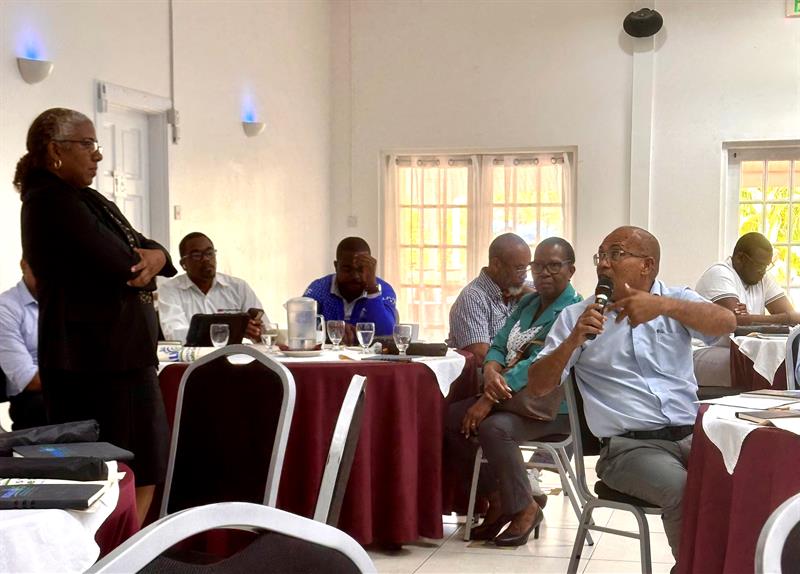
These efforts were highlighted during the 2026 Annual Importers’ Meeting, held on 11 November 2026 at the Bay Gardens Hotel. Organised by the Department of Sustainable Development’s National Ozone Unit (NOU), the meeting brought together refrigerant importers, technicians, government agencies and other stakeholders to discuss national refrigerant management priorities.
Through its continued implementation of the Montreal Protocol and its Kigali Amendment, Saint Lucia is working to protect the ozone layer, reduce the climate impacts of refrigerants and promote more sustainable cooling practices.
Addressing participants, Chief Sustainable Development and Environment Officer, Mrs Dawn Pierre-Nathoniel, underscored the importance of sustainable cooling to Saint Lucia's development.
“Cooling is essential to our homes, businesses, tourism industry and critical services, but meeting these needs sustainably requires careful attention to energy efficiency, technology choices, refrigerant management and the costs faced by consumers and businesses,” she stated.
The meeting also served as the final stakeholder consultation on Saint Lucia’s National Inventory of Banks of Used and Unwanted Refrigerants and its accompanying National Action Plan. Participants also reviewed the revised National Cooling Strategy and refrigerant import arrangements for 2027.
The meeting highlighted findings from Saint Lucia's first national assessment of refrigerants contained in existing refrigeration and air-conditioning equipment. Presented by national consultant, Kasha Hytmiah and international consultant, Anna Vartanyan, the assessment estimated that approximately 180,000 kg of refrigerants were contained in equipment in use at the end of 2025, with around 13,600 kg potentially becoming waste each year. A proposed National Action Plan, estimated at US$310,000, outlines measures to strengthen refrigerant recovery, storage, technician certification and environmentally sound disposal. The findings will guide efforts to strengthen the safe recovery, storage and management of used and unwanted refrigerants, reducing the risk of their release into the environment.
UNIDO Consultant, Benise Joseph, presented the revised National Cooling Strategy, which outlines an integrated approach to making cooling in Saint Lucia more energy-efficient and environmentally sustainable. It addresses improvements in refrigeration and air-conditioning technologies, energy-efficient buildings, the safe management of refrigerants and the skills needed within the cooling industry. These measures are intended to support more sustainable cooling for households and businesses while reducing energy consumption and environmental impacts.
The NOU also provided an update on refrigerant import controls for 2027. These national controls support Saint Lucia's obligations under the Montreal Protocol and its Kigali Amendment. Discussions also highlighted the importance of continued collaboration with importers to support compliance and the gradual transition towards more climate-friendly alternatives.
Stakeholders also discussed proposed concessions to encourage the use of cooling equipment with lower environmental impacts. Further consultations on these proposals are expected in January 2027.
The meeting also received an update on efforts to revitalise the National Refrigeration and Air Conditioning Association, an initiative expected to strengthen industry representation and collaboration within Saint Lucia’s cooling sector.
Moving forward, the Department of Sustainable Development will continue working with importers, technicians, industry associations and other partners to advance the priorities identified at the meeting. Sustained collaboration will be essential to translating the proposed measures into practical action and supporting Saint Lucia’s transition towards a more energy-efficient, environmentally sustainable and affordable cooling sector.
The Department of Sustainable Development extends sincere appreciation to all participants, the national and international consultants and the Multilateral Fund for the Implementation of the Montreal Protocol, the United Nations Environment Programme (UNEP) and the United Nations Industrial Development Organization (UNIDO) for their continued support of Saint Lucia's ozone protection programme.