WFP DEPUTY COUNTRY DIRECTOR DANIEL LONGHURST EXPLAINED HOW THE ASSESSMENT WILL GUIDE FUTURE SUPPORT.
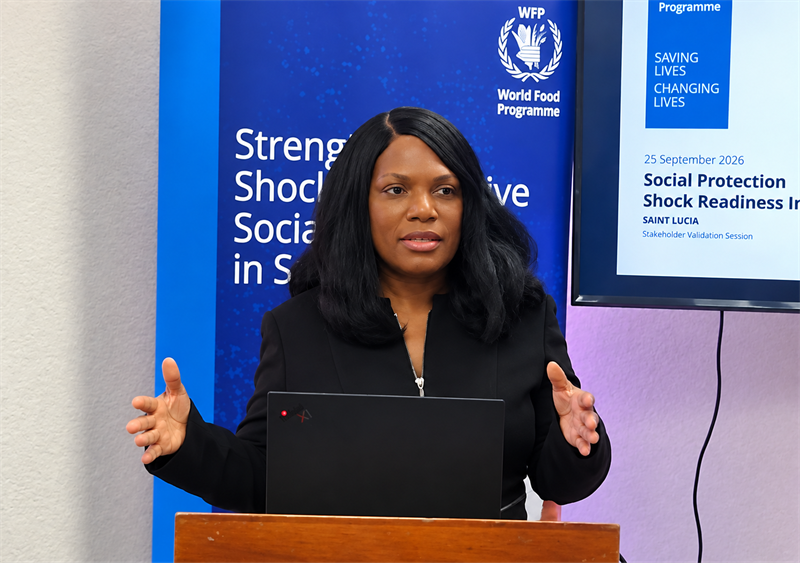 Saint Lucia’s capacity to support vulnerable households during shocks and emergencies was the focus of a World Food Programme (WFP) validation workshop held at NEMO Headquarters, Bisee.
Representatives of WFP’s Multi-Country Office in Barbados, the Department of Equity, Social Justice, Gender and Older Persons, NEMO, the Ministry of Finance and other partners reviewed assessment findings to identify strengths and priority areas for improving emergency response through social protection programmes.
WFP Deputy Country Director Daniel Longhurst explained how the assessment will guide future support. “This activity is very important. It is designed to help WFP and the partners we support, including the Ministry of Equity, NEMO and the Ministry of Finance, establish a baseline to assess their readiness to respond to different shocks through social protection mechanisms. It will help us identify areas where governments are strong and where they would like to invest more, so we can work with them and other partners over time to strengthen those areas,” he added.
Following three days of stakeholder engagement, Permanent Secretary Esther Rigobert highlighted the tool’s role in assessing national readiness. “The last three days the team has been here in St. Lucia engaging key stakeholders like Ministry of Equity, NEMO, Ministry of Finance and other partners to get a sense of how ready we are. So the tool is called the Shock Readiness Index and it allows us to see in terms of our social protection programs how responsive we are as a country,” Rigobert noted.
The assessment will help guide efforts to strengthen preparedness and deliver timely, effective assistance to vulnerable households during emergencies.
- END -