THE SOPS ARE INTENDED TO GUIDE THE ACTIONS OF GOVERNMENT AND ITS PARTNERS BEFORE AND AFTER DISASTERS
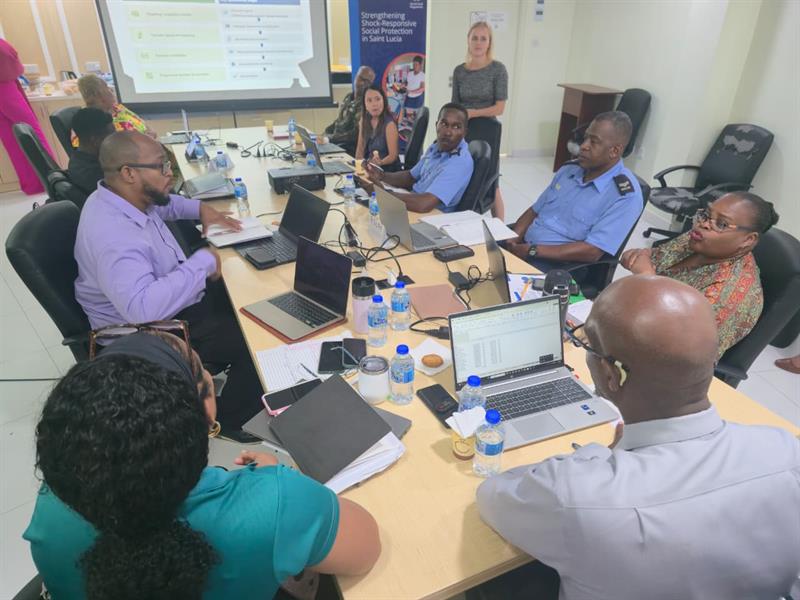 Saint Lucia continues to strengthen its capacity to protect vulnerable households before and after disasters following the successful conclusion of a three-day stakeholder workshop focused on anticipatory action and shock-responsive social protection.
The July 8-10, 2026, workshop brought together representatives from the Department of Equity, Social Justice, Gender and Older Persons, the National Emergency Management Organisation (NEMO), the Ministry of Finance, the Treasury Department, the Royal Saint Lucia Police Force, the Saint Lucia Meteorological Services and other key stakeholders to review and refine Standard Operating Procedures (SOPs) designed to support vulnerable households in times of crisis.
The SOPs are intended to guide the actions of Government and its partners before and after disasters, ensuring that financial assistance and social protection support can be delivered quickly and efficiently to those most in need.
World Food Programme (WFP) Programme Policy Officer and facilitator, Elisaveta Gouretskaia, noted that Saint Lucia has already made significant progress in strengthening its anticipatory action mechanisms.
"What we see is that many stakeholders are aware of the overall mechanism and the roles or tasks they would have to perform if the mechanism is activated. It is very encouraging to see that many stakeholders are on board and already sensitized, but we also see a need for stronger sensitization of the population and further testing of these processes through simulations to ensure they work effectively in practice."
Gouretskaia explained that the workshop provided an opportunity for agencies to assess the operational readiness of the systems being developed, identify gaps and strengthen coordination among institutions responsible for disaster preparedness and response.
Director of Social Transformation in the Department of Equity, Social Justice, Gender and Older Persons, Tanzia Toussaint, emphasized the importance of ensuring that social protection systems are capable of responding rapidly when vulnerable households face the impacts of hurricanes and other shocks.
"This process is helping Saint Lucia build a stronger and more responsive social protection system. By working closely with our national partners, we are strengthening the mechanisms needed to identify and support vulnerable households before disasters occur and to provide timely assistance when communities are affected. Ultimately, our goal is to ensure that no one is left behind during times of crisis," noted Toussaint.
Participants reviewed both anticipatory action measures, which can be activated before an impending disaster, and post-disaster assistance mechanisms intended to support recovery efforts once an event has occurred. Discussions also focused on improving data management, household verification processes and public awareness to ensure that assistance can reach those who need it most.
The workshop also highlighted the importance of continued simulation exercises and stakeholder engagement to test and refine procedures under realistic conditions, ensuring that systems remain practical, efficient and fit for purpose.
The workshop formed part of the European Union–Caribbean Resilience Programme (EU-CA-RES), a regional initiative funded by the European Union and implemented with UNICEF, WFP, UNDP and UNDRR to strengthen social protection, disaster preparedness and community resilience across the Caribbean.