While the clean-up activity delivered immediate results, local government representatives emphasized that sustained improvements will depend on consistent community action.
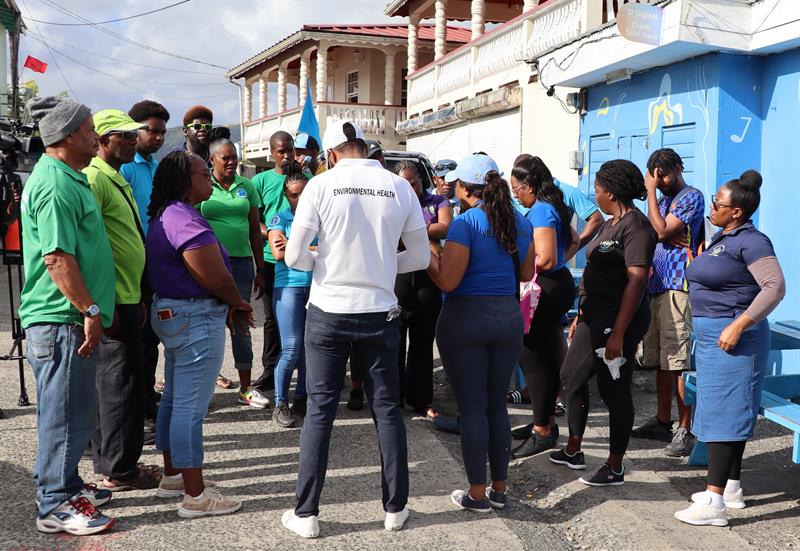 The Ministry of Health, Wellness and Nutrition, through its Environmental Health Division, conducted a community clean-up exercise in Au Leon, Dennery on Saturday, February 14, as part of ongoing efforts to reduce vector breeding sites and lower the risk of mosquito-borne illnesses. Environmental Health Officers, with support from community members, worked collaboratively to remove garbage and identify potential high-risk areas for mosquito breeding throughout the community. The initiative forms part of the Ministry’s broader strategy to strengthen vector control measures and promote healthier living environments.
Senior Environmental Health Officer for Vector Control, Charletta Charles-Leon, underscored the importance of community engagement in sustaining vector control efforts and fostering behavioral change: “What we want to really gain out of it is that we've raised some level of awareness. The community is more aware of the actions or how their actions and behavior can trigger a spike in vector-borne diseases. And basically just encourage cleaner sanitation within the community, clean environment, healthy environment.”
While the clean-up activity delivered immediate results, local government representatives emphasized that sustained improvements will depend on consistent community action. Emrand Matthew, Chairperson of the Dennery North Constituency Council, highlighted the Council’s ongoing efforts and called for continued public cooperation: “It is something that we believe should continue. Of course, the Council, on countless occasions, would have made the effort to clear the area of those wastes. We also would want to make a special appeal to the people, of course, to take heed of bulk collection days and other waste so that this accumulation doesn't happen and continue in the community.”
The Deputy Chairperson of the Dennery North Constituency Council, Kendal Emmanuel, pointed to the need for stronger regulatory measures to address improper waste disposal: “I think the time has come where we need to have legislation that will bring that level of deterrent where persons will be held responsible, where they're not adhering to the basic standards of proper waste disposal.”
The Ministry of Health, Wellness and Nutrition continues to encourage residents to properly dispose of waste, make full use of bulk collection services, and regularly clear their surroundings
of items that can collect standing water. These simple but consistent actions are critical in preventing mosquito breeding and reducing the risk of vector-borne diseases within communities.