Testing and vaccines will be made available should the need arise.
 In light of the recent wave of Yellow Fever cases in the region, the Organization of Eastern Caribbean States’ Health Unit convened a virtual meeting in April to address the concerns of member states and share useful and timely information on the prevention of the disease.
Head of Health Information, Communicable Disease, and Emergency Response at the Caribbean Public Health Agency (CARPHA), Dr. Rosmond Adams, addressed the current state of Yellow Fever in Brazil and shared knowledge on the three types of Yellow Fever transmission—sylvatic (jungle), intermediate and urban.
Dr. Adams noted that the transmission in Brazil remains of the sylvatic (jungle) cycle and not, the more concerning, urban cycle. The sylvatic, or jungle, cycle involves transmission of the virus through non-human primates in the wild. Humans can then become infected by these mosquitoes when visiting or working in the jungle.
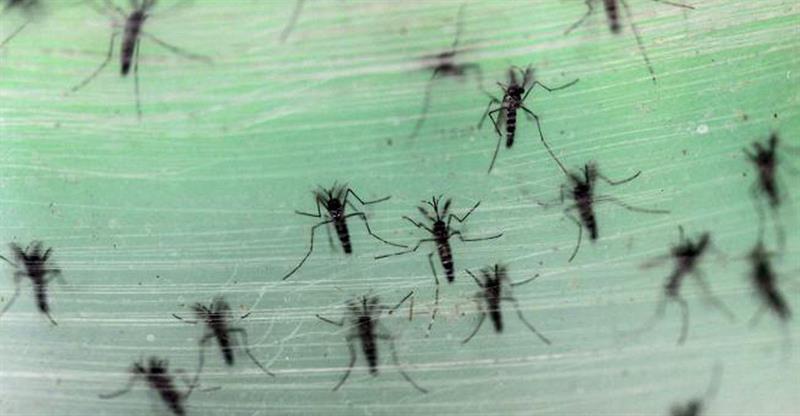
The urban cycle is mainly transmitted to humans through the bite of an infected Aedes aegypti mosquito which acquires the virus by feeding on other infected humans.
The Pan American Health Organization (PAHO) and the World Health Organization (WHO), are closely monitoring the situation and providing appropriate updates to regional health ministries. In the event of a suspected case, CARPHA will support OECS member states in testing for the disease. PAHO has also pledged to make Yellow Fever vaccines available for persons likely to be exposed, should the need arise.